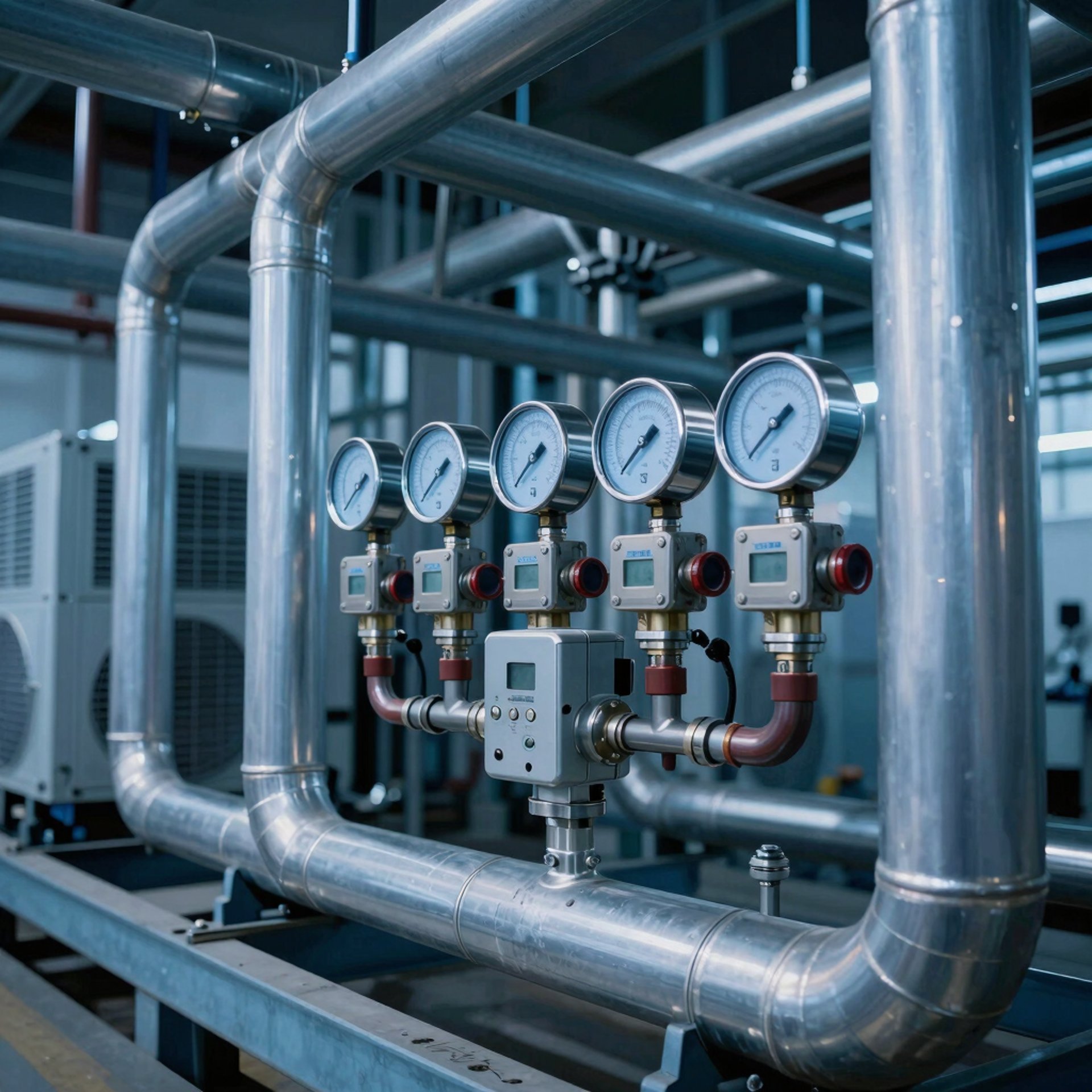
Chiller Repair in Dubai: Why Every Hour of Downtime Costs More Than You Think
Need reliable chiller repair in Dubai? Learn why chiller downtime is costly, common causes of failure, and how preventive maintenance can protect your HVAC-R system.
CHILLER REPAIR IN DUBAI
If you run a facility in Dubai — a factory floor, a cold storage warehouse, a hospital, a mall, or a data center — you already know that your chiller isn't just another piece of equipment. It's the heartbeat of your building. When it stops, everything built around it starts to feel the strain almost immediately: temperatures climb, product spoils, servers overheat, and tenants start calling.
And in Dubai, where outdoor temperatures regularly cross 45°C in summer, a chiller failure isn't a minor inconvenience. It's an emergency.
Why Chillers Fail More Often Here Than Anywhere Else
Dubai's climate is uniquely punishing on industrial cooling systems. The combination of extreme heat, high humidity near the coast, and airborne dust from the desert puts chillers under year-round stress that most manufacturers never designed for.
A few of the most common culprits behind chiller breakdowns in the UAE:
Condenser fouling — dust and sand accumulate on condenser coils faster here than in almost any other climate, choking heat rejection and forcing the compressor to work harder than it should.
Refrigerant leaks — constant thermal cycling between blistering days and cooler nights stresses joints, seals, and brazed connections over time.
Compressor overload — when ambient temperatures spike, compressors run longer and hotter, which shortens their lifespan if maintenance has been inconsistent.
Water treatment issues — for water-cooled chillers, scale buildup from local water quality is a frequent, quietly destructive problem that goes unnoticed until efficiency drops sharply.
Electrical and control faults — heat also degrades wiring insulation, contactors, and control boards faster, leading to nuisance trips or outright failures.
None of these are exotic problems. They're predictable, and mostly preventable — but only if someone is watching for them before they become a shutdown.
The Real Cost of Waiting
Facility managers often delay calling for chiller service because a unit is "still running, just not perfectly." That instinct is understandable, but it's usually the most expensive decision on the table.
A chiller limping along at reduced capacity is quietly costing money in three ways at once: higher energy consumption as the compressor overworks itself, accelerated wear on components that are already stressed, and rising risk of a sudden, total failure at the worst possible moment — usually during peak demand.
In industrial and commercial settings across the UAE, an unplanned chiller outage can mean:
Halted production lines
Spoiled inventory in cold storage or pharmaceutical facilities
Server room overheating and data center shutdowns
Uncomfortable, non-compliant conditions in hospitals, labs, or malls
Emergency repair costs that run several times higher than scheduled maintenance would have
This is why industrial operators increasingly treat chiller uptime the same way they treat any other critical infrastructure: with monitoring, fast response protocols, and technicians who understand the equipment before there's a crisis, not after.
What Good Chiller Repair Actually Looks Like
A proper repair isn't just "get it running again." It's a diagnostic process:
Isolate the fault — is it mechanical, electrical, refrigerant-related, or a control system issue?
Check root cause, not just symptom — a tripped compressor might be a symptom of low refrigerant charge, a failing condenser fan, or a dirty coil. Fixing only the trip without addressing the cause guarantees a repeat failure.
Verify system performance after repair — pressures, temperatures, and amperage draw should all be checked against manufacturer specs before the job is called complete.
Document everything — for facilities under compliance requirements (pharma, food storage, healthcare), a clear service record isn't optional.
Experienced engineers can usually tell within minutes of arriving on site whether they're looking at a quick fix or something that needs a more involved intervention — but that only holds true if they're trained on industrial-scale systems, not just residential AC units.
Why Response Time Matters as Much as Repair Quality
In an industrial setting, the difference between a technician arriving in 20 minutes versus two hours can be the difference between a minor disruption and a full shutdown. This is especially true for:
Cold chain and food storage facilities, where product loss starts within hours
Data centers and server rooms, where overheating risk is measured in minutes
Hospitals and labs, where temperature-sensitive materials and patient comfort are non-negotiable
Manufacturing plants running continuous processes
That's the reasoning behind 24/7 emergency dispatch models for HVAC-R — the goal isn't just fixing the chiller eventually, it's minimizing the window where a facility is exposed.
Preventive Maintenance: The Cheapest Insurance You'll Ever Buy
Every chiller failure story we hear eventually circles back to the same regret: "We knew it was due for service." Regular preventive maintenance — condenser cleaning, refrigerant level checks, electrical inspections, and performance testing — catches the vast majority of failures while they're still cheap, scheduled fixes instead of expensive emergencies.
For Dubai's climate specifically, a realistic maintenance rhythm looks like:
Monthly visual inspections and coil checks during peak summer months
Quarterly refrigerant and electrical system checks
Bi-annual deep cleaning of condensers and evaporators
Annual full performance audits against manufacturer benchmarks
Facilities that stick to this rhythm consistently report fewer breakdowns, lower energy bills, and chillers that simply last longer before major component replacement is needed.
The Bottom Line
Chiller repair in Dubai isn't just a maintenance task — it's risk management for your entire operation. The climate here doesn't forgive delayed maintenance or slow response times, and the cost of downtime almost always outweighs the cost of proactive care.
If your chiller is showing early warning signs — reduced cooling capacity, unusual noise, rising energy bills, or frequent short-cycling — it's worth having it inspected before it becomes a full shutdown.
Need a chiller inspected or repaired now? Call the dispatch line directly at +971 54 594 1207 for immediate response, or reach the team on WhatsApp at +971 56 364 7429. Engineers are on active duty around the clock for industrial HVAC-R emergencies across the UAE.