Chiller Maintenance in UAE: Complete Guide for Commercial Buildings
Learn why chiller maintenance is essential in the UAE. Discover benefits, maintenance schedules, and expert HVAC-R solutions from CoolVault.
AC REPIRE
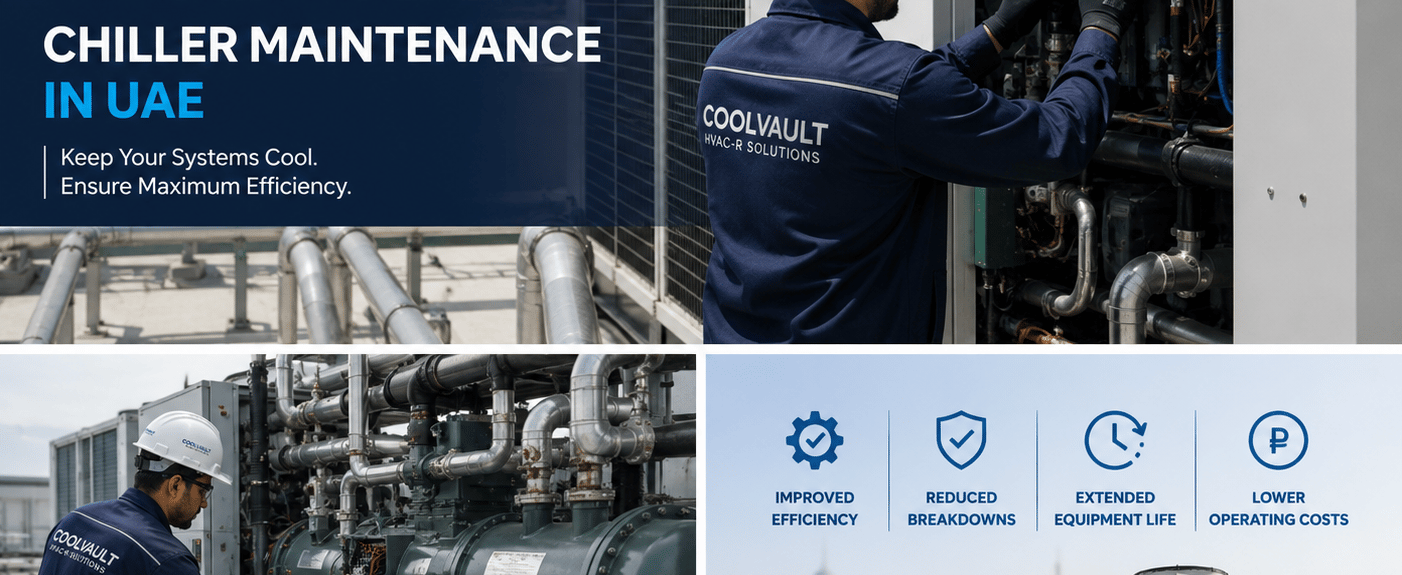
With summer temperatures in the UAE regularly exceeding 45 °C, a properly maintained chiller is not a luxury — it is a business-critical necessity. This guide covers everything facility managers and building owners need to know.

📋 Table of Contents


1. What Is a Chiller and How Does It Work?
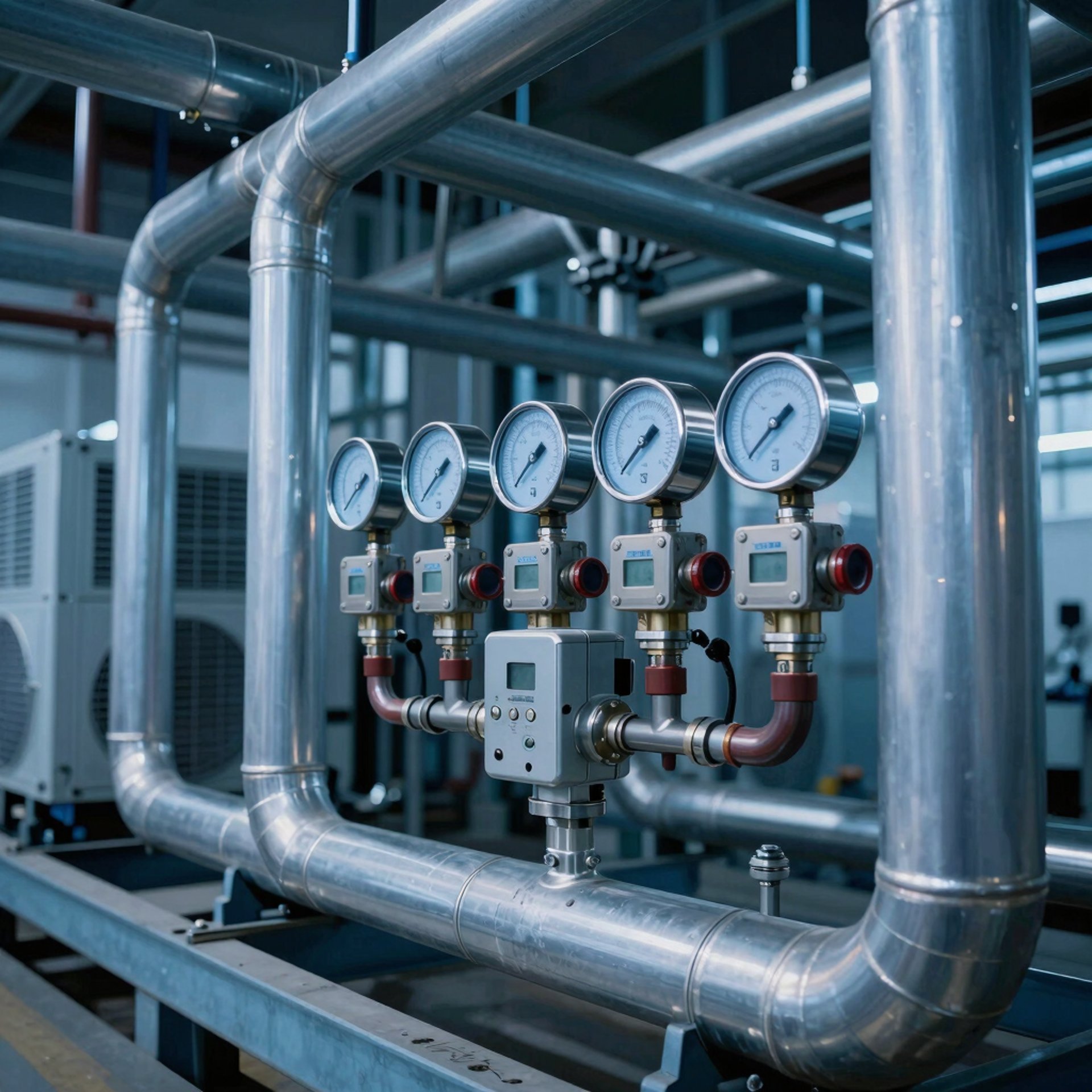
A chiller is a mechanical device that removes heat from a liquid — typically water or a water-glycol solution — through a refrigeration cycle. The chilled liquid then circulates through air-handling units (AHUs) or fan coil units (FCUs) across a building to deliver cooling where it is needed.
Commercial buildings in the UAE — from shopping malls and hotels to hospitals, data centres, and office towers — rely on large centrifugal, screw, or scroll chillers to maintain comfortable indoor temperatures around the clock.
The Four Core Components of a Chiller
🔵Compressor
Pressurises the refrigerant gas, driving the entire refrigeration cycle. The heart of the system.
🌊Condenser
Releases heat absorbed from the building to the atmosphere or a cooling tower water circuit.
❄️Evaporator
Transfers heat from the chilled-water loop to the refrigerant, producing the cooling effect.
🔧Expansion Valve
Controls refrigerant flow and pressure drop between the condenser and evaporator.
2. Why Chiller Maintenance Is Critical in the UAE
The UAE climate places chillers under extreme, year-round stress. Unlike temperate countries where cooling systems get a natural seasonal rest, UAE-based chillers often operate at near-full capacity for eight to ten months of the year.
⚠️ The UAE ChallengeAmbient temperatures above 45 °C force condensers to work significantly harder, accelerating refrigerant degradation, tube fouling, and compressor wear. Without a structured maintenance programme, chiller efficiency can drop by 15–25% within a single season.
UAE-Specific Stressors on Chillers
Dust and sandstorms clog condenser fins and heat-exchanger tubes at a far higher rate than in other regions. High humidity along the coast promotes corrosion on copper tubes, insulation, and electrical components. The combination of intense solar radiation on rooftop units and sustained heavy loads dramatically shortens component lifespans without proactive maintenance.
Dubai Municipality, Abu Dhabi Department of Energy (DoE), and Sharjah's relevant authorities all require commercial buildings to maintain HVAC systems in compliance with local regulations — making documented chiller maintenance not just operationally smart, but legally necessary.
3. Key Benefits of Regular Chiller Maintenance
⚡Lower Energy Bills
Clean heat-exchanger tubes and properly charged refrigerant can cut energy consumption by up to 40%, delivering fast ROI on every maintenance visit.
🛡️Fewer Breakdowns
Predictive maintenance catches failing bearings, low refrigerant charge, and fouled tubes before they cause costly emergency shutdowns.
📅Extended Equipment Life
A well-maintained commercial chiller can reliably serve a building for 20–25 years, versus 12–15 years without proper care.
🌡️Consistent Comfort
Stable leaving-water temperatures mean no hot zones or comfort complaints — critical for hospitality and healthcare settings.
🌿Reduced Carbon Footprint
An efficient chiller uses less electricity, helping your building meet Dubai Green Building Regulations and ESTIDAMA Pearl Rating requirements.
📄Regulatory Compliance
Documented maintenance records demonstrate compliance with UAE municipality requirements and support FM contractor SLA reporting.
4. Chiller Maintenance Schedule: Monthly, Quarterly & Annual
A best-practice chiller maintenance programme in the UAE follows a tiered schedule. Below is the framework used by CoolVault's certified HVAC-R engineers across commercial properties in Dubai, Abu Dhabi, Sharjah, and beyond.
FrequencyTasksMonthlyCheck refrigerant pressure & temperatures · Inspect electrical connections & contactors · Verify controls & safety cut-outs · Check oil level and pressure (centrifugal/screw) · Log operating data for trend analysis · Inspect condenser and evaporator water temperatures · Verify chilled-water pump performanceQuarterlyClean condenser tubes (brush or chemical) · Check & tighten all electrical terminations · Inspect vibration isolators and flexible connections · Test expansion valve operation · Check motor insulation resistance · Inspect water treatment system · Verify BMS/EMS control setpoints · Lubricate bearings (where applicable)AnnualFull eddy-current tube inspection · Refrigerant leak detection survey · Compressor oil analysis · Thermal imaging of electrical panels · Full condenser & evaporator chemical cleaning · Refrigerant top-up or recovery/recharge · Safety valve and pressure vessel certification · Performance efficiency test (kW/TR) · Compliance documentation update
💡 Pro Tip for UAE BuildingsSchedule your annual chiller overhaul in October or November — just after the peak summer season ends — so any repairs discovered during the annual inspection can be completed before the next high-load period begins.
5. Warning Signs Your Chiller Needs Immediate Service
Do not wait for a scheduled visit if you notice any of the following symptoms. Left unaddressed, these signals often escalate into full system failures.
Leaving chilled-water temperature is higher than the design setpoint by more than 1–2 °C
Sudden increase in energy consumption (kW) without a corresponding rise in cooling load
Unusual noises — grinding, knocking, or high-pitched squealing from the compressor
Water leaks around the evaporator, condenser, or pump connections
Frequent high-pressure or low-pressure fault trips on the control panel
Ice forming on the evaporator or chilled-water piping
Visible refrigerant oil stains around compressor connections (possible leak)
Condenser approach temperature consistently above 3 °C (indicating tube fouling)
If your building management system (BMS) is logging any of these fault codes or trends, contact a qualified HVAC-R technician immediately. Emergency chiller failures in the UAE summer can cause significant tenant discomfort, business disruption, and, in the case of hospitals or data centres, critical risk.
6. DIY Checks vs. Professional HVAC-R Service
While no maintenance task on a refrigerant-charged machine should be performed by unqualified personnel, your in-house facility team can carry out valuable daily and weekly visual checks that extend the interval between call-outs.
What Your Facility Team Can Do
Daily log-reading — noting entering and leaving water temperatures, refrigerant pressures, and amp draws — creates the trend data your service contractor needs for predictive analysis. Checking that cooling tower water treatment dosing systems are operating, and that condenser water temperatures are within expected ranges, keeps the chiller's head pressure in a healthy band. Ensuring all plant room access panels are closed and ventilation louvres are unobstructed also supports efficient operation.
What Requires a Certified HVAC-R Engineer
Any task involving refrigerant handling, electrical panel access, pressure testing, tube cleaning chemicals, or compressor oil systems must be carried out by a licensed HVAC-R contractor. In the UAE, handling F-gas refrigerants without a relevant qualification is a regulatory violation. Ensure your service provider holds valid UAE contractor licences and that engineers are certified by the chiller manufacturer or an internationally recognised body such as ASHRAE or CIBSE.
7. Cost of Chiller Maintenance in the UAE
Chiller maintenance costs in the UAE vary based on chiller type, cooling capacity (TR), number of units, and the scope of the maintenance contract. Below is a general guide.
Contract TypeTypical ScopeApproximate Cost (AED / year)Preventive Maintenance (PMC)Scheduled visits only; parts extraAED 15,000 – 45,000Comprehensive Maintenance (CMC)Scheduled visits + parts + labourAED 45,000 – 120,000Full Maintenance (FMC)All-inclusive including compressor overhaulAED 80,000 – 250,000+
📊 The ROI of MaintenanceFor a 500 TR chiller operating at AED 0.38/kWh, improving COP by just 0.2 (e.g., from 5.8 to 6.0) saves roughly AED 90,000 in electricity annually — meaning a comprehensive maintenance contract often pays for itself within weeks, not years.
8. How to Choose a Chiller Maintenance Company in the UAE
With dozens of HVAC contractors operating across Dubai, Abu Dhabi, and Sharjah, selecting the right partner is crucial. Use this checklist when evaluating service providers.
Valid UAE trade licence and municipality approvals for HVAC-R works
Manufacturer-authorised service status (e.g., Carrier, Trane, York, Daikin, McQuay)
Certified HVAC-R engineers with F-gas handling qualifications
Documented service reports, digital log books, and performance trend analysis
24/7 emergency response capability with guaranteed response times
Proven portfolio of comparable commercial projects in the UAE
Compliance with ASHRAE 90.1 and UAE ESTIDAMA energy efficiency benchmarks
Transparent contract structure — PMC, CMC, or FMC — with clear scope of work
9. Frequently Asked Questions
How often should a commercial chiller be serviced in the UAE?▾
What is the average lifespan of a commercial chiller in the UAE?▾
Can I run my chiller without a maintenance contract?▾
What refrigerants are used in UAE commercial chillers?▾
How can I reduce my chiller energy costs in the UAE?▾
What is a chiller performance test (kW/TR) and why does it matter?▾
Is Your Chiller Ready for the UAE Summer?
CoolVault's certified HVAC-R engineers provide comprehensive chiller maintenance contracts, emergency repairs, and energy optimisation services across Dubai, Abu Dhabi, Sharjah, and the wider UAE.